
North Korea Warns Japan of “Additional Military Options” After Tomahawk Missile Test
The biggest concern is the cycle of military buildup. Japan’s longer-range weapons are intended to strengthen deterrence, but North Korea interprets them as a reason to expand its own capabilities.
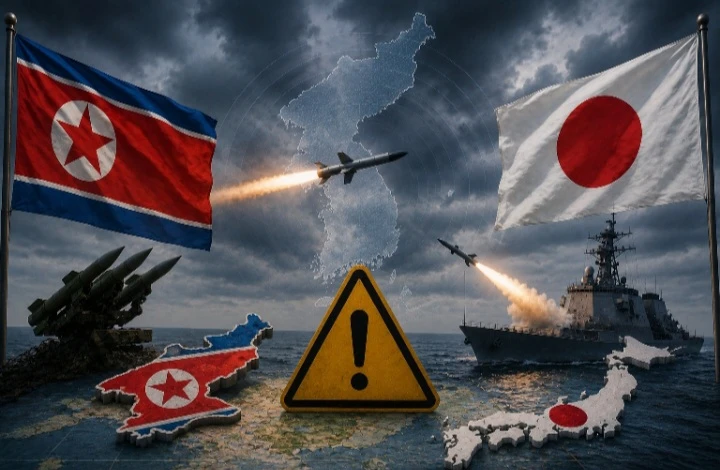
AI Generated Image
Pyongyang/Tokyo, August 8, 2026: Tensions in East Asia have intensified after North Korea warned Japan that it could take further military measures in response to Tokyo’s expanding long-range strike capabilities.
Kim Yo Jong, the influential sister of North Korean leader Kim Jong Un, criticized Japan’s recent testing of a U.S.-made Tomahawk cruise missile and accused Tokyo of moving beyond what Pyongyang considers a purely defensive military posture. She warned that North Korea would not remain passive as Japan develops capabilities that could potentially be used for attacks beyond its territory.
The statement comes at a sensitive moment for regional security, with Japan strengthening its defense capabilities, the United States deepening military cooperation with Tokyo and Seoul, and North Korea continuing its missile development program.
North Korea Objects to Japan’s Military Expansion
North Korea’s latest warning was published through its state media and focused heavily on Japan’s growing ability to conduct long-range strikes.
Kim Yo Jong criticized Japan’s recent firing of a Tomahawk missile from the Aegis destroyer Chokai. She also objected to Japan’s participation in military exercises with the United States and the Philippines.
According to Reuters, Kim portrayed these developments as evidence that Japan is moving toward a capability for pre-emptive and overseas military operations.
Tokyo, however, has described its expanding military capabilities as part of efforts to strengthen national defense in an increasingly difficult security environment.
The disagreement reflects a broader regional debate over how far Japan should go in developing military capabilities that were historically restricted by its post-World War II security framework.
Tomahawk Missile Capability Becomes a Major Issue
The Tomahawk is a long-range cruise missile designed to strike targets from considerable distances.
Japan’s acquisition and testing of the weapon are part of a broader effort to strengthen its ability to respond to missile threats and potential attacks.
For Tokyo, long-range strike capabilities can serve as a deterrent by giving Japan the ability to threaten an adversary’s military assets rather than relying entirely on intercepting incoming missiles.
For North Korea, however, the same capability is viewed very differently.
Pyongyang argues that the development of long-range weapons by Japan could eventually provide Tokyo with the ability to conduct attacks against North Korean territory.
That perception is contributing to an increasingly complex security environment in Northeast Asia.
North Korea Promises a Response
Kim Yo Jong’s warning did not specify exactly what North Korea’s next military action would be.
Instead, she said Pyongyang would consider “additional military options” in response to what she described as Japan’s changing military posture.
The ambiguity is significant.
North Korea has a wide range of military capabilities, including ballistic missiles, cruise missiles and nuclear weapons.
A future response could therefore take several forms, ranging from another weapons test to increased military exercises or stronger diplomatic threats.
North Korea also carried out a short-range ballistic missile launch on August 6, according to South Korea’s military. The projectile was fired toward waters off the Korean Peninsula’s eastern coast.
The launch demonstrated that the latest political warnings are occurring alongside continued military activity.
Japan Faces a Changing Security Environment
Japan has been steadily strengthening its defense capabilities in response to growing concerns involving North Korea, China and regional military developments.
Tokyo has increased defense spending, expanded missile-defense capabilities and begun acquiring longer-range weapons.
Japanese officials argue that the country’s security environment has become more challenging and that conventional defensive measures alone may not provide sufficient deterrence.
The government has therefore pursued what it describes as a stronger ability to respond if Japan comes under attack.
The policy represents one of the most significant changes in Japan’s defense posture in decades.
U.S. Alliance Adds Another Dimension
The United States remains a central element of Japan’s security strategy.
Washington and Tokyo conduct regular military exercises and cooperate on missile defense, intelligence and regional security.
North Korea views this cooperation as part of a broader U.S.-led security network that includes Japan and South Korea.
Pyongyang has repeatedly criticized trilateral military cooperation among the three countries, arguing that it creates additional pressure on North Korea.
Washington and its allies, however, say their military cooperation is designed to deter North Korean aggression and protect regional stability.
This difference in interpretation creates a familiar security dilemma: one side’s defensive preparations can appear offensive to the other.
South Korea Also Watches Closely
South Korea has a direct interest in Japan’s military expansion because of its geographical proximity to both Japan and North Korea.
Seoul and Tokyo have historically had complicated political relations, but the threat posed by North Korean missiles has encouraged greater security cooperation.
The United States has pushed the two countries toward closer military coordination, particularly in missile-warning and intelligence-sharing activities.
North Korea strongly opposes this cooperation.
Any further escalation between Pyongyang and Tokyo could therefore affect the wider U.S.-Japan-South Korea security relationship.
Recent Missile Activity Adds Pressure
North Korea’s latest warning comes after a series of missile-related developments.
On August 6, South Korea reported that North Korea had fired a short-range ballistic missile toward the sea.
The launch followed Kim Yo Jong’s criticism of Japan and demonstrated that North Korea continues to use military tests as a tool for signaling its strategic intentions.
Such launches also provide Pyongyang with opportunities to evaluate its weapons systems and demonstrate military capabilities to neighboring countries.
For Japan, repeated North Korean launches reinforce the argument for stronger missile defenses and longer-range deterrence.
China Is Another Important Factor
The dispute between North Korea and Japan is occurring within a larger regional competition involving China and the United States.
China has opposed what it considers the expansion of U.S.-aligned military capabilities in the region.
Japan, meanwhile, has increasingly expressed concern about China’s growing military power and activities around disputed waters.
North Korea’s closer strategic relationship with China and Russia also adds complexity to the regional balance.
Although Pyongyang’s latest warning specifically targeted Japan, its implications extend across the wider Indo-Pacific security environment.
Could the Situation Escalate?
The immediate danger is not necessarily a major military confrontation.
North Korea frequently uses strong rhetoric as part of its political and military strategy. Such statements can serve several purposes, including deterring adversaries, influencing public opinion and justifying further weapons development.
However, repeated military activity can increase the possibility of miscalculation.
If North Korea conducts additional missile tests and Japan responds by expanding its military exercises, both sides could enter a cycle in which each new defensive measure is interpreted as evidence of offensive intentions.
That could make the regional security environment increasingly unstable.
Japan’s Defense Strategy Under Scrutiny
The latest dispute also raises questions inside Japan about how far the country should go in expanding its military capabilities.
Supporters of the policy argue that Japan needs stronger deterrence because its neighbors possess advanced missile systems.
Critics worry that acquiring long-range strike weapons could gradually move Japan away from its traditionally defensive security posture.
The debate is likely to continue as Japan increases its investment in missile systems, aircraft, naval capabilities and other military technologies.
North Korea’s latest warning could further strengthen arguments among Japanese policymakers who believe that additional defense capabilities are necessary.
A Dangerous Security Cycle
The central problem in Northeast Asia is that several countries are simultaneously responding to perceived threats.
North Korea develops missiles because it says it faces hostile military forces.
Japan strengthens its defenses because it faces North Korean missiles and China’s military expansion.
South Korea increases military cooperation with the United States and Japan because of North Korea.
The United States expands regional cooperation because of concerns about China and North Korea.
Each country describes its actions as defensive, but the other side may interpret them as preparation for attack.
This is the classic security dilemma—and it is becoming increasingly visible in East Asia.
What to Watch Next
Several developments could determine whether tensions increase further:
- Another North Korean missile test.
- Additional Japanese long-range missile exercises.
- New U.S.-Japan-South Korea military drills.
- North Korean statements about Japan’s defense policy.
- Changes in Japan’s defense spending.
- Chinese reactions to Japan’s expanding strike capabilities.
- Any attempt to restart diplomatic dialogue with Pyongyang.
The next North Korean weapons test could be particularly significant because it would show whether Kim Yo Jong’s warning is followed by a concrete military response.
Conclusion
North Korea’s warning to Japan highlights the rapidly changing security environment in East Asia.
Japan is developing longer-range military capabilities that Tokyo views as necessary for deterrence, while Pyongyang sees those same capabilities as evidence of a growing threat.
The latest dispute is occurring alongside continued North Korean missile activity and closer security cooperation among Japan, South Korea and the United States.
For now, there is no indication that the latest warning automatically means a major conflict is imminent. But the combination of stronger military capabilities, frequent weapons tests and increasingly hostile rhetoric creates a greater risk of miscalculation.
The challenge for regional governments will be finding ways to strengthen deterrence while keeping diplomatic channels open enough to prevent military competition from turning into an uncontrollable escalation.