
Vance and Netanyahu Stress Strategic Partnership as Security Cooperation Remains Central to US-Israel Alliance
Vice President JD Vance’s remarks highlight that strategic allies can maintain strong partnerships even while holding candid discussions on sensitive policy issues. His clarification that the meeting with Prime Minister Benjamin Netanyahu was constructive suggests that diplomatic differences do not necessarily weaken the broader US-Israel relationship.
At the same time, the continued success of jointly developed missile defense systems such as Iron Dome and Arrow underscores the importance of long-term defense cooperation. As regional security challenges evolve, the combination of open political dialogue, intelligence sharing, and advanced military technology is likely to remain a cornerstone of efforts to deter threats and promote stability in the Middle East.
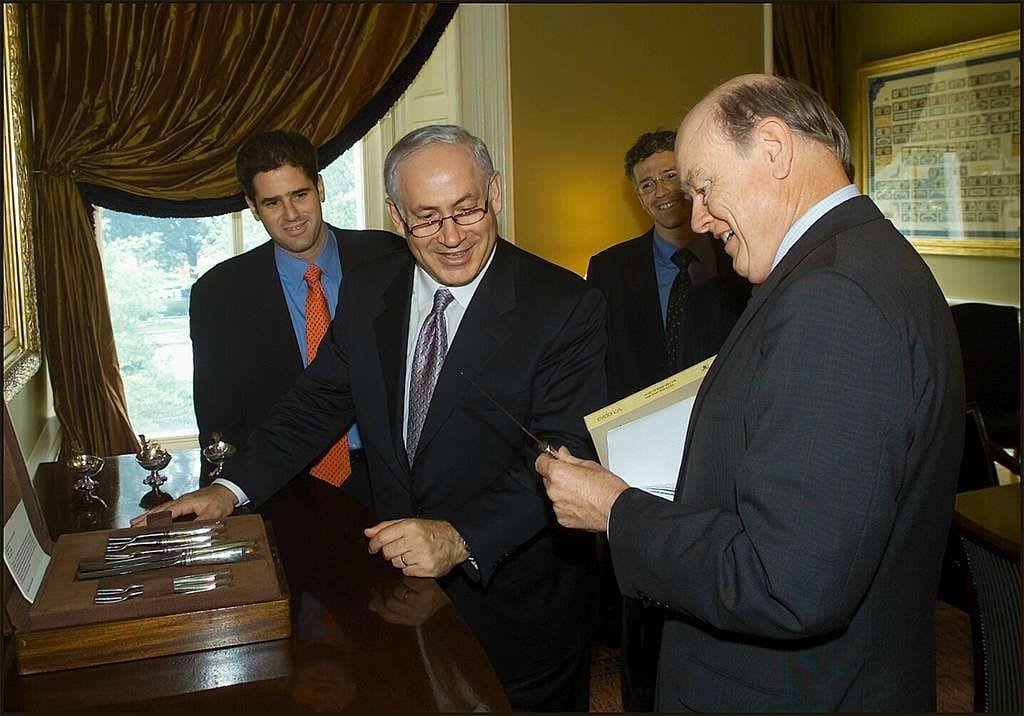
The relationship between the United States and Israel remains one of the most closely watched partnerships in global politics, particularly during periods of heightened regional tensions. Recent remarks by US Vice President JD Vance have once again drawn attention to the complex nature of this alliance. After meeting Israeli Prime Minister Benjamin Netanyahu, Vance clarified that their discussion was not confrontational, describing it instead as “a nice and frank conversation.”
His comments came after earlier public criticism suggesting that some factions within Netanyahu’s governing coalition were attempting to complicate or delay diplomatic efforts related to Iran. While those remarks sparked widespread speculation about disagreements between Washington and Jerusalem, Vance’s latest statement emphasized that open dialogue between allies is both normal and necessary.
Honest Conversations Between Close Allies
Diplomatic relationships between long-standing allies are rarely free from disagreements. The United States and Israel have shared decades of strategic cooperation while also experiencing periodic differences over regional security, military operations, and diplomatic negotiations.
By characterizing his meeting with Netanyahu as both “nice” and “frank,” Vance highlighted an important aspect of modern diplomacy: partners can discuss difficult issues candidly without damaging their broader relationship. Such discussions often involve differing assessments of regional threats, military strategies, or diplomatic priorities, but they also demonstrate a willingness to maintain direct communication.
Officials from both countries have consistently stressed that strategic cooperation remains strong despite occasional policy differences.
Iran Remains at the Center of Regional Diplomacy
Iran continues to be one of the most significant security concerns for both Israel and the United States, although the two governments sometimes approach diplomatic strategies differently.
Israel has repeatedly expressed concern over Iran’s missile capabilities, regional influence, and support for armed groups operating across the Middle East. Israeli leaders have argued that Tehran’s expanding military network presents a long-term threat to regional stability.
The United States also views Iran as a major regional challenge but has historically balanced military deterrence with diplomatic engagement, depending on the administration in power.
Vice President Vance’s earlier criticism regarding factions allegedly attempting to undermine ceasefire discussions reflected concerns that political decisions inside Israel could affect broader regional negotiations. His clarification following the Netanyahu meeting suggests that despite differing perspectives, both governments continue to engage constructively.
Missile Defense Cooperation Defines the Security Partnership
Perhaps no aspect of US-Israel cooperation better illustrates the depth of their alliance than missile defense.
Over the past two decades, the United States has invested billions of dollars in supporting Israeli air-defense technology. This cooperation includes financial assistance, joint research, technological development, and military coordination.
The partnership has produced several advanced defensive systems capable of intercepting a wide variety of aerial threats.
Among the most well-known is the Iron Dome system, designed primarily to intercept short-range rockets fired toward populated areas. Since becoming operational, it has been used extensively during conflicts involving Hamas and other armed groups operating from Gaza.
The system automatically calculates whether an incoming rocket poses a threat to populated areas. If the projectile is expected to land harmlessly in open terrain, no interceptor is launched. If it threatens civilians or critical infrastructure, an interceptor missile is fired to destroy it in midair.
This selective engagement helps reduce costs while maintaining high operational effectiveness.
Arrow System Provides Protection Against Long-Range Threats
Complementing Iron Dome is the Arrow missile defense program, jointly developed by Israel and the United States.
Unlike Iron Dome, which focuses on short-range threats, Arrow is designed to intercept longer-range ballistic missiles at much higher altitudes.
Several versions of the system have been developed over the years, each incorporating improved radar technology, faster interception capabilities, and expanded operational reach.
The Arrow program represents one of the most sophisticated examples of bilateral defense cooperation between Washington and Jerusalem.
Its continued development demonstrates both countries’ commitment to maintaining layered missile defenses capable of addressing evolving regional threats.
Multi-Layered Defense Network
Israel’s defensive architecture extends beyond Iron Dome and Arrow.
Additional systems fill the gap between short-range and long-range interception, creating a comprehensive, multi-layered shield.
Advanced radar installations continuously monitor surrounding airspace, while command-and-control centers rapidly coordinate responses to incoming threats.
Artificial intelligence, real-time tracking, and integrated communications allow different systems to operate together efficiently during large-scale attacks involving rockets, cruise missiles, drones, and ballistic missiles.
This layered approach significantly improves the country’s ability to defend civilian populations.
US Support Goes Beyond Funding
American assistance extends well beyond financial contributions.
Defense industries from both countries collaborate on research, testing, manufacturing, and technological innovation.
Joint military exercises help ensure interoperability between American and Israeli forces.
Intelligence sharing also plays an important role in identifying emerging threats and improving early-warning capabilities.
These combined efforts have strengthened the operational readiness of both nations while contributing to broader regional security cooperation.
Regional Conflicts Highlight Defense Capabilities
Recent years have seen multiple rounds of hostilities involving rocket and missile attacks on Israeli territory.
During these periods, defensive systems have been activated repeatedly to protect major cities, transportation hubs, and critical infrastructure.
Although no missile defense system offers complete protection, interception technology has significantly reduced casualties and infrastructure damage compared with earlier decades.
Military analysts generally agree that layered missile defense has become one of Israel’s most important strategic assets.
Diplomacy and Security Continue Together
The latest comments from Vice President Vance illustrate that diplomacy and military cooperation often proceed simultaneously.
Even when policymakers disagree over specific negotiations, broader strategic partnerships frequently remain intact.
The United States continues to view Israel as a key regional ally, while Israel values American political, military, and technological support.
Future discussions between leaders are likely to include regional security, Iran, humanitarian concerns, defense cooperation, and broader Middle East stability.
Looking Ahead
The meeting between Vice President JD Vance and Prime Minister Benjamin Netanyahu serves as a reminder that strong alliances can accommodate honest disagreements without undermining shared strategic objectives. Vance’s description of their discussion as constructive reinforces the importance of open communication between close partners facing common security challenges.
Meanwhile, continued cooperation on advanced missile defense systems—including Iron Dome and the Arrow program—demonstrates the practical foundation of the US-Israel relationship. As regional tensions evolve, both nations are expected to maintain close coordination on defense, intelligence, and diplomacy while navigating the complex political landscape of the Middle East.
Whether addressing ceasefire negotiations, responding to missile threats, or shaping future regional security policies, the partnership between Washington and Jerusalem remains a defining element of Middle Eastern geopolitics.