South Africa Seeks $15.6 Billion in Climate Finance to Tackle Global Warming and Accelerate Energy Transition
South Africa is facing mounting financial pressure as it works to address climate change, strengthen infrastructure against extreme weather and reduce its dependence on coal-based energy.
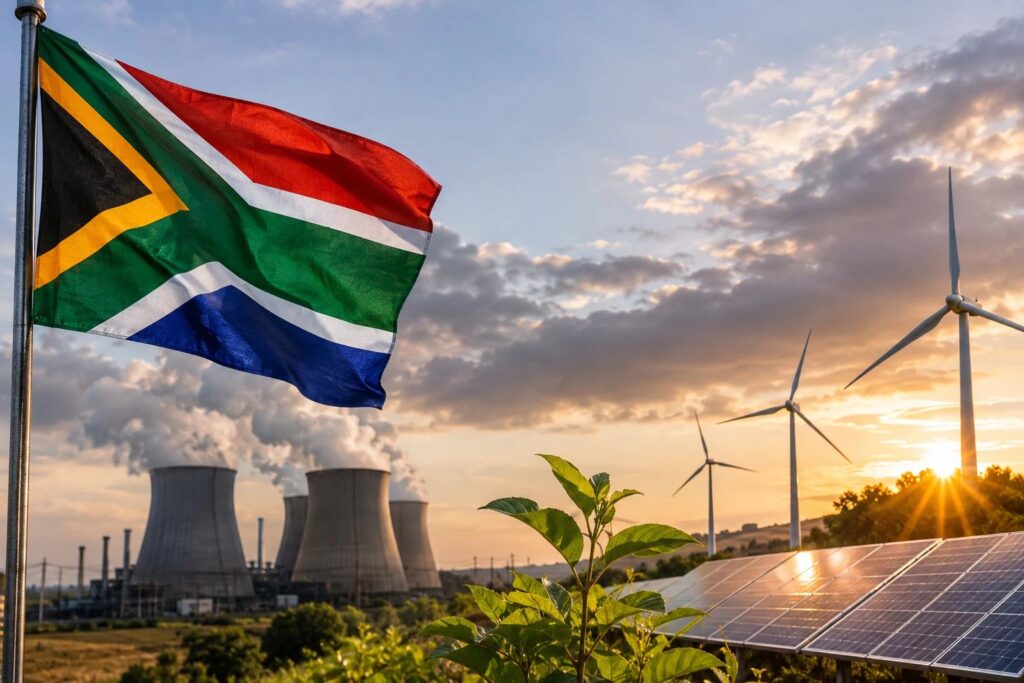
The country is seeking substantial financial support to advance its climate commitments, with international funding expected to play an important role in helping finance renewable energy, climate adaptation and the transition towards a lower-carbon economy.
The issue has gained renewed attention during the COP31 climate negotiations in Antalya, Türkiye, where South African representatives are urging wealthier nations to increase financial assistance to developing economies.
South Africa’s broader climate investment requirements are estimated at approximately 3.7 trillion rand over the 2026–2035 period, equivalent to around 228 billion US dollars.
International Funding Becomes a Major Priority
South Africa believes developed economies should provide greater financial assistance to countries facing the economic consequences of climate change.
The country’s chief climate negotiator, Maesela Kekana, has emphasized that developing nations need predictable and sufficient funding to implement climate policies and protect vulnerable communities.
He has called for stronger financial commitments from wealthier countries, arguing that developing economies cannot be expected to meet ambitious environmental targets without appropriate financial and technological support.
The discussions are taking place under the broader framework of the Paris Agreement, which establishes international cooperation on reducing greenhouse gas emissions and addressing climate impacts.
Billions Required for Adaptation and Emissions Reduction
South Africa’s climate investment requirements cover two major areas.
The government estimates that approximately 250 billion rand will be needed for priority climate adaptation measures, while another 3.47 trillion rand is required for emissions reduction and mitigation between 2026 and 2035.
The funding will support projects involving infrastructure improvements, renewable energy development, electricity system upgrades, electric vehicle deployment and the retirement of ageing coal-fired power stations.
Investment will also be necessary to improve flood protection, strengthen water security and protect communities exposed to extreme weather events.
Extreme Weather Adds to Financial Pressure
South Africa has experienced increasingly costly climate-related disasters, including severe flooding in several provinces.
Flooding in the Eastern Cape during 2025 resulted in approximately 101 deaths, while repeated extreme weather events have damaged roads, public facilities and other essential infrastructure.
Flooding has also affected KwaZulu-Natal and the Western Cape, increasing the financial burden on government authorities and local communities.
The rehabilitation of damaged infrastructure requires substantial public expenditure, making international climate funding increasingly important.
Coal Dependence Complicates the Energy Transition
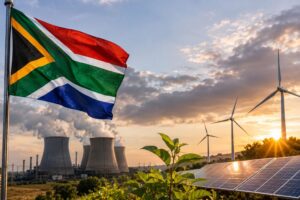
South Africa faces another major challenge because its economy remains heavily dependent on coal-fired electricity generation.
The energy sector accounts for approximately 78.6 percent of the country’s greenhouse gas emissions, making electricity generation a central part of its climate strategy.
The government intends to gradually retire ageing coal-fired power stations while expanding renewable energy capacity and developing alternative energy infrastructure.
However, the transition also has important social and economic consequences.
Coal mining employs approximately 90,977 people, meaning that changes in the energy sector must consider employment, household incomes and the economic future of communities dependent on coal-related activities.
The government is therefore seeking investment that can support workers and local businesses during the transition.
South Africa Looks to Attract Private and International Capital
International climate partnerships remain an important source of financing for South Africa.
The country previously secured commitments under the Just Energy Transition Partnership, which was designed to support its move towards a cleaner energy system.
South Africa is also exploring green financing instruments and mechanisms capable of attracting investment from domestic and international financial markets.
A proposed sovereign green bond could provide another channel for raising capital to support eligible environmental and infrastructure projects.
However, government officials acknowledge that public resources alone will not be sufficient to meet the country’s long-term climate investment requirements.
COP31 Negotiations Could Shape Future Climate Funding
South Africa is using the COP31 negotiations to push for more predictable financial commitments from developed economies.
The country wants international climate finance arrangements to include clearer responsibilities, improved access to funding and greater support for developing countries.
The negotiations also address the wider challenge of ensuring that financial assistance reaches projects and communities that need it most.
For South Africa, securing additional funding is not simply an environmental objective. It is also connected to economic development, energy security, infrastructure resilience and employment creation.
The coming years will be important in determining whether international financial commitments can translate into practical investment capable of supporting the country’s climate ambitions.