Pacific Climate Groups Set Five Red Lines Ahead of COP31
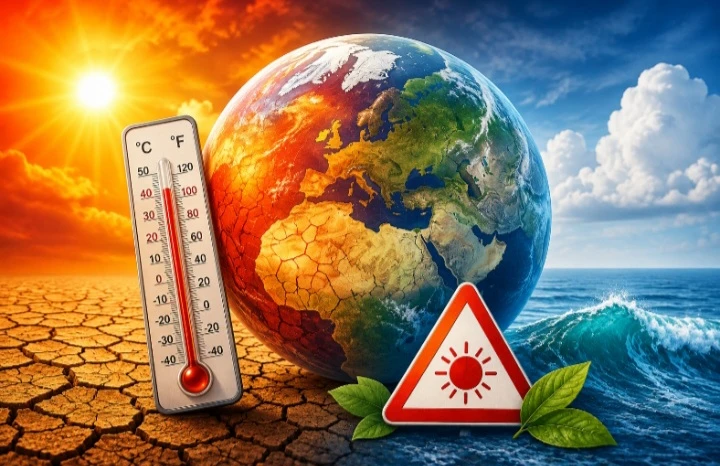
Nadi, Fiji: Pacific climate advocates have issued five major “red lines” ahead of the Pre-COP31 meetings in Fiji and Tuvalu, demanding stronger action to keep the global temperature goal of 1.5°C within reach.
The demands were presented as Pacific governments, civil society groups and climate campaigners gathered for the October 5–8 Pre-COP31 process, which is intended to build momentum ahead of the main UN climate conference in Antalya, Türkiye.
Five Non-Negotiable Demands
The Pacific Islands Climate Action Network (PICAN) has outlined five priorities that it says should not be compromised during international climate negotiations.
The first is a rejection of what campaigners describe as “false solutions” that could allow greenhouse-gas emissions or fossil-fuel extraction to continue without delivering the structural changes required to limit warming.
The second calls for an immediate phase-out of fossil fuels, including no new oil fields, coal mines or gas fields.
No New Extraction
The third red line focuses on extraction.
Pacific civil society groups argue that the region’s lands, oceans, territories and communities should not be treated simply as resources for continued exploitation.
The demand comes as Pacific nations continue to face severe consequences from rising temperatures, sea-level rise, coastal erosion and extreme weather despite contributing only a small share of historical global greenhouse-gas emissions.
Protect the Living Planet
The fourth demand calls for stronger protection of ecosystems and communities.
Pacific advocates want climate policies to recognise local communities as rights-holders and environmental defenders rather than treating conservation solely as a technical or economic issue.
For island nations, protecting coral reefs, coastlines, forests and marine ecosystems is closely connected to food security, livelihoods, culture and long-term survival.
Loss and Damage Should Not Be Reduced to a Price
The fifth red line concerns non-economic loss and damage.
Pacific campaigners argue that some climate-related losses cannot simply be converted into financial values. Cultural heritage, traditional knowledge, identity, community connections and permanent displacement can have consequences that cannot be adequately measured through monetary compensation.
The demand therefore calls for a climate-justice approach that recognises these impacts rather than treating every loss as a financial calculation.
1.5°C Remains a Survival Threshold
The Pacific climate movement has repeatedly stressed that the 1.5°C target is not merely a diplomatic ambition.
For many small island states, additional warming could intensify sea-level rise, coastal flooding, coral damage, water insecurity and displacement.
Pacific civil society groups have therefore urged governments to treat the 1.5°C threshold as a fundamental survival issue rather than a negotiating figure.
Pressure on Fossil-Fuel Producers
The demands are also putting pressure on major fossil-fuel-producing countries participating in the Pacific climate discussions.
Australia has faced particular criticism because it is both a major Pacific partner and a significant exporter of coal and gas.
The controversy intensified after approval was given for an expansion of the Hunter Valley Operations coal mine, which environmental groups estimate could allow hundreds of millions of tonnes of additional coal extraction and result in substantial greenhouse-gas emissions.
Pacific leaders have questioned how countries can claim climate leadership while continuing to approve or support new fossil-fuel developments.
Climate Finance Is Also Central
Alongside fossil-fuel demands, Pacific governments are pushing for greater access to climate finance.
The region wants funding for adaptation, resilience, loss and damage and locally led climate projects to reach vulnerable communities more directly.
The Pre-COP31 process is also highlighting the importance of Pacific-led solutions, including renewable energy, climate-resilient infrastructure and community-based adaptation.
A Critical Moment Before COP31
The Pre-COP31 meetings in Fiji and Tuvalu are designed to give Pacific countries and communities a stronger voice before the main negotiations in Türkiye.
The UN climate process has confirmed that Fiji, Tuvalu and Australia are partnering to deliver the official Pre-COP31 ministerial and leaders’ events from October 5 to 8.
The five red lines therefore provide a clear framework for what Pacific civil society expects from the negotiations.
For Pacific climate advocates, the message is straightforward: limiting warming to 1.5°C requires more than declarations. They are demanding an end to new fossil-fuel expansion, stronger protection of ecosystems, meaningful climate finance and recognition of losses that cannot be measured simply in money.